
The orthodontic industry is evolving rapidly. Between shrinking reimbursements, rising overhead, staffing challenges, and increasingly informed patients, practice leadership in 2026 requires more than clinical excellence. It demands strategic, emotionally intelligent, system-driven leadership.
The practices that will thrive in 2026 won’t simply work harder – they will lead better.
Developing strong orthodontic leadership skills is no longer optional. It is the foundation upon which sustainable, growth-focused practices are built. Whether you are investing in leadership training for orthodontics at the managerial level or refining orthodontic office management systems across your team, the following five competencies are essential for staying competitive in today’s landscape.
Here are the top five leadership skills every orthodontic practice must develop to stay competitive, sustainable, and growth-focused.
1. Strategic Financial Awareness
In today’s landscape, financial literacy is no longer optional for practice leaders – it is one of the most critical dental practice leadership responsibilities. Leaders must understand revenue and payer mix trends, profit margins by provider and location, overhead ratios, insurance performance metrics, and cash flow forecasting. This doesn’t mean every leader needs to become an accountant – but they must understand how daily operational decisions impact long-term profitability.
Strong leaders in 2026 will make data-driven decisions, evaluate PPO participation strategically, monitor AR trends consistently, and align compensation with production goals.
Financial awareness protects practices from reactive decision-making and positions them for sustainable growth.
2. System-Based Accountability
Accountability is often misunderstood as blame. In reality, high-performing practices view accountability as clarity and follow-through, and building that culture is a core orthodontic office management responsibility.
Effective leaders define measurable expectations, track key performance indicators, hold consistent check-ins, and use scoreboards and reporting dashboards. Without structure, even the most talented teams drift. With structure, they thrive.
In 2026, leaders must create environments where goals are visible, metrics are reviewed regularly, underperformance is addressed constructively, and wins are celebrated intentionally.
Accountability builds momentum when it is rooted in systems – not emotion.
3. Communication Mastery
The modern orthodontic team is multi-generational and often hybrid in structure. Clear communication has become one of the most essential orthodontic leadership skills and one of the most underdeveloped.
Leaders must be able to deliver expectations clearly, navigate difficult conversations, address performance gaps respectfully, and communicate financial value to patients. Miscommunication is expensive. It leads to team conflict, decreased morale, lost case acceptance, and patient dissatisfaction.
Effective leadership training for orthodontics prioritizes communication frameworks that reduce friction and build confidence across the entire organization – from the front desk to the clinical floor.
4. Change Management & Adaptability
The orthodontic environment is not static. Technology evolves. Insurance models shift. Patient expectations increase. Staffing dynamics fluctuate.
Adaptability is now a defining characteristic of strong dental practice leadership. Leaders in 2026 must be capable of implementing new software effectively, transitioning fee structures thoughtfully, training teams through change, and managing uncertainty without spreading panic.
Change resistance often stems from unclear leadership. When leaders explain the “why,” outline the plan, and provide structured training, teams adapt more quickly and with greater confidence.
Practices that embrace change strategically rather than emotionally will maintain a lasting competitive advantage.
5. Culture & Talent Development
Staffing remains one of the biggest pressures in orthodontics. Recruiting is important – but retention is critical. And retention starts with leadership.
Effective orthodontic office management goes beyond scheduling and systems. It means investing in ongoing training, providing clear growth pathways, establishing role clarity, and delivering consistent feedback. In 2026, high-performing practices will prioritize leadership development at every level, cross-training to reduce bottlenecks, and coaching over micromanaging.
This is where intentional leadership training for orthodontics pays dividends. Team members stay where they feel valued, challenged, and supported. A healthy culture directly impacts productivity, patient experience, case acceptance, and financial performance.
Leadership sets the tone. Culture determines the outcome.
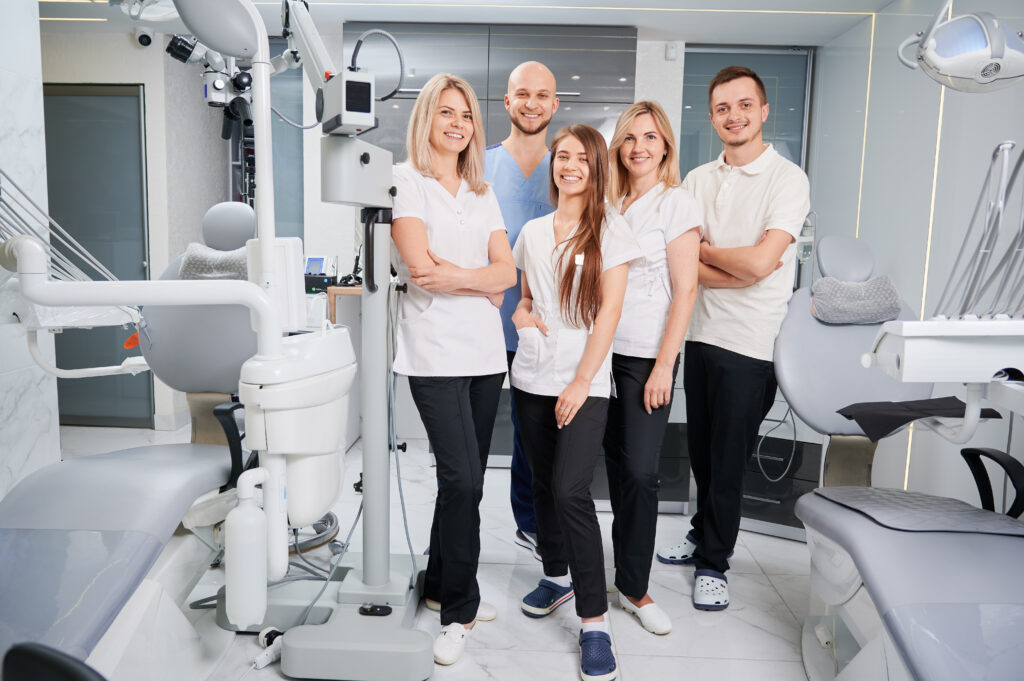
The Future of Orthodontic Leadership
The next phase of orthodontic success will not be defined solely by clinical excellence. It will be defined by leadership capacity.
Practices that focus on building genuine orthodontic leadership skills – financial intelligence, system-driven accountability, clear communication, adaptability, and talent development – will outperform those operating on instinct alone. Strong dental practice leadership is no longer about managing daily tasks. It is about building the infrastructure that allows teams to perform confidently, consistently, and sustainably. And that starts with investing in the right leadership training for orthodontics before the gaps become too costly to ignore.
As 2026 unfolds, the question isn’t whether leadership matters – it’s whether your practice is developing it intentionally.